
Solar Farm Fencing Contractor Serving the Midwest
Big Red Fencing installs perimeter fencing for solar energy installations of all scales across Oklahoma and seven surrounding states. If you are a solar developer, project manager, or general contractor looking for a specialized fencing contractor with the experience and capacity to handle utility-scale perimeter work, this is the page that answers your question.
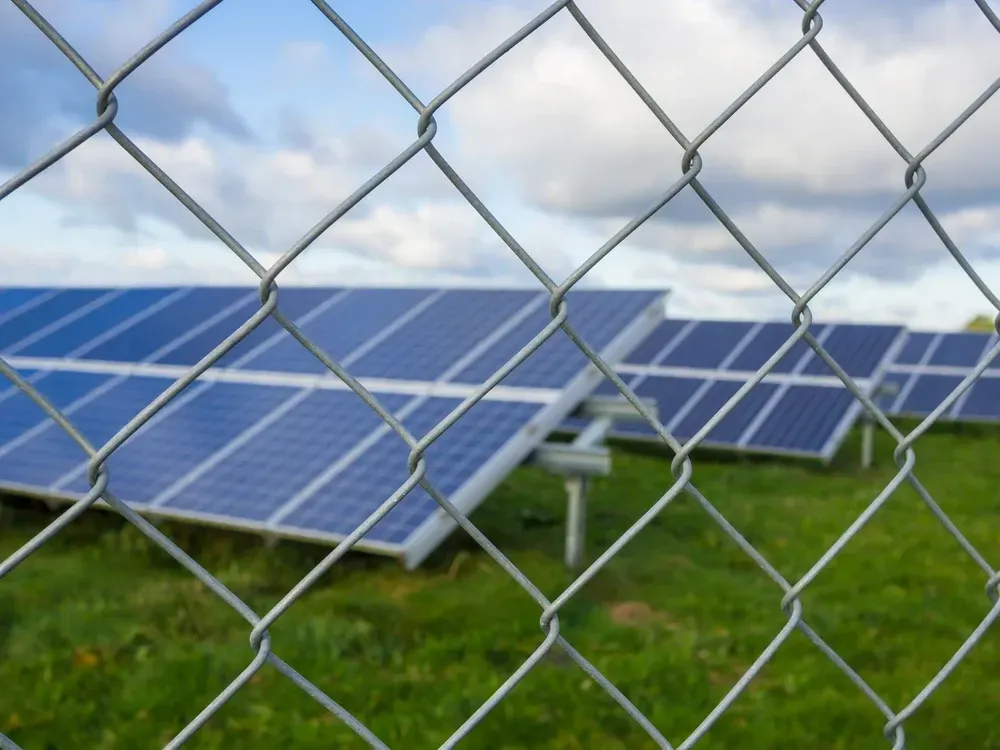
Solar Farm Perimeter Fencing Built for Large-Scale Energy Projects
Big Red Fencing is a licensed and accredited commercial fencing contractor based in Oklahoma, with more than 16 years of experience in commercial, industrial, and energy sector fencing. We install solar farm perimeter fencing across Oklahoma,
Colorado,
Kansas,
Nebraska,
North Dakota,
South Dakota,
Texas, and
Wyoming, covering the growing footprint of solar energy development throughout the Midwest and Plains states.
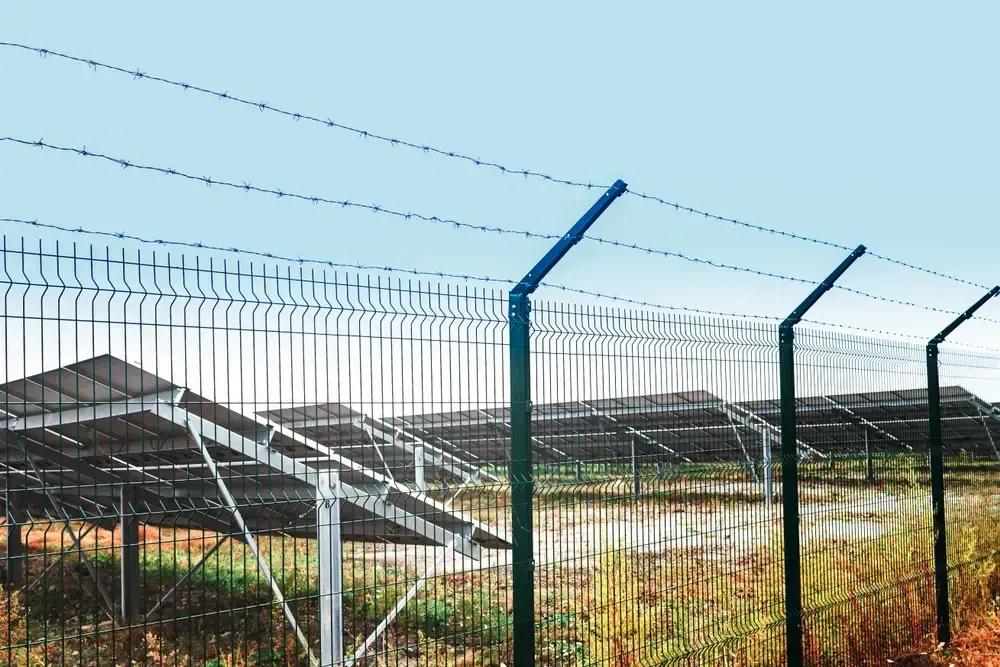
Solar field boundary fencing is not general commercial work. It requires precise fence specification and design aligned to the project's security requirements, setback distances, maintenance access points, and construction phase coordination. The fencing types we install for solar perimeter applications include heavy-gauge chain link in 9-gauge and heavier configurations, anti-climb top treatments including barbed wire outriggers and razor wire where permitted, and high-tension wire for agricultural-adjacent perimeter sections where chain link is cost-prohibitive or impractical.
Perimeters on utility-scale solar installations commonly span thousands of linear feet. Our team is built for that scale. No project is too large, and no project gets handed off to a crew without the commercial-grade installation standards that energy facility fencing requires.
Why Solar Developers Choose a Specialized Fencing Contractor
The decision to hire a contractor with energy sector fencing experience rather than a general commercial fence company comes down to project coordination and specification knowledge. Active solar development sites are complex environments. Equipment staging areas shift as construction progresses. Permitting phases affect when perimeter sections can be installed. Construction access points need to remain functional until operational phase fencing can close the perimeter. A general fence contractor who lacks large-scale project coordination experience introduces schedule risk at a stage when every trade on site is already managing tight timelines.
Big Red Fencing coordinates directly with project managers and general contractors to align fencing installation with site development milestones. Gate placement is more than a fencing decision because it affects maintenance access to inverters and transformers, as well as emergency vehicle entry throughout the facility's operational life.
Fence height requirements for solar perimeter security, setback distances from panel arrays, and code requirements for anti-climb top treatments are all specification details our team reviews before installation begins. This planning helps ensure the fencing is installed correctly and supports the access,
security, and operational needs of the solar facility.
This is the core differentiator: large-scale capability backed by energy sector project experience, not generalist commercial fencing applied to a solar job.
Solar Farm Fencing Options: Materials and Configurations
Specifying the right fencing for a solar perimeter installation depends on the project's scale, terrain, security requirements, and developer specifications. The primary configurations our team installs at solar energy facilities across the Midwest and Plains states include:
- Heavy Gauge Chain Link Fencing: One of the most common options for solar farm perimeter fencing. Utility scale installations typically use 9 gauge or heavier chain link fabric at heights of 6 to 8 feet, with galvanized steel posts sized to commercial grade specifications.
- Anti Climb Fencing Configurations: Barbed wire outriggers are a common top treatment for utility scale solar perimeter fencing. Where local permitting allows and security requirements call for it, razor wire may also be used. Top treatments are selected based on the project's location, security requirements, and applicable codes.
- High Tension Wire Fencing: Used along sections of larger solar installations on agricultural land where chain link may be cost prohibitive across extended linear footage. This can be practical for rural solar installations where the perimeter crosses open agricultural terrain.
- Solar Farm Access Gates: Vehicle rated swing gates and slide gates provide access for maintenance vehicles, inverter service, and emergency entry. Personnel gates can be positioned at secondary access points, with gate count, size, and placement determined during project planning.
- Project Specific Fence Specifications: Post specifications, fabric gauge, gate hardware, and top treatment selection are documented for each project. Big Red Fencing provides this specification as part of the free on site estimate process.
Multi State Solar Fencing Projects: Our Service Area
Big Red Fencing's 8-state service area covers the primary geography of Midwest and Plains solar energy development. The states we serve are Oklahoma, Colorado, Kansas, Nebraska, North Dakota, South Dakota, Texas, and Wyoming. Oklahoma is our home state, where we are licensed and accredited. Active project experience extends across all eight states.
For solar developers managing projects in more than one state, a single contractor relationship with consistent installation standards and a single point of project coordination is a meaningful operational advantage. Our team handles the fence specification, site assessment, installation scheduling, and general contractor coordination for perimeter fencing across this entire footprint.
If your project is in one of these eight states, contact our team for a free estimate and on-site assessment. We will review the project scope, terrain, and developer specifications and provide a project bid based on actual site conditions.
Solar Farm Fencing Contractor Questions Answered
What type of fencing is used on solar farms?
Solar farms typically use heavy gauge chain link fencing, commonly 9 gauge or heavier, installed at heights of 6 to 8 feet for utility scale perimeter security. Anti climb top treatments, including barbed wire outriggers or razor wire, can be added based on site security requirements and local permitting, while larger solar installations on agricultural land may use high tension wire fencing along sections where chain link would be cost prohibitive across extended linear footage. Gate placement is planned around maintenance access points for inverters, transformers, and emergency vehicle entry, with Big Red Fencing specifying and installing each configuration based on the project's scale, location, terrain, and developer requirements.
How much does solar farm perimeter fencing cost?
Solar farm fencing costs vary significantly based on perimeter length, fence type, terrain, and site access. A utility scale solar installation can span thousands of linear feet, making per foot pricing useful for project budgeting. Because costs also depend on project specific factors such as gate count, terrain difficulty, and material specifications required by the developer, an on site assessment is the most accurate way to develop a project bid. Big Red Fencing provides free on site estimates for solar perimeter fencing projects across its eight state Midwest service area, with no obligation to proceed. Contact our team to schedule your project assessment.
Do you install solar farm fencing outside of Oklahoma?
Yes. Big Red Fencing installs solar farm perimeter fencing across Oklahoma, Colorado, Kansas, Nebraska, North Dakota, South Dakota, Texas, and Wyoming. The company is based in Oklahoma and licensed and accredited in the state, with active project experience across the Midwest and Plains states where solar energy development continues to expand. Multi-state solar development projects with perimeter fencing needs in more than one state can be coordinated through a single contractor relationship with our team. Contact us to discuss your project scope and confirm service availability for your specific location.
How long does it take to fence a solar farm?
Solar farm perimeter fencing installation timelines depend on the perimeter length, terrain, and coordination required with other site contractors. A large utility scale solar installation may require several weeks of active fence installation across the full perimeter. Big Red Fencing coordinates directly with project managers and general contractors to align fencing work with site development milestones, including equipment staging areas and construction access points that must remain functional during earlier project phases. Contacting our team early in the project planning phase allows us to assess your timeline, confirm crew availability, and incorporate fencing installation into the broader project schedule.
Are you licensed to work on large commercial and energy sector fencing projects?
Big Red Fencing is licensed and accredited in Oklahoma, with more than 16 years of experience in commercial, industrial, and energy sector fencing projects. The company operates across eight Midwest and Plains states and has completed large-scale fencing projects for energy sector clients, including solar and wind farm installations. Licensing requirements vary by state, so contact Big Red Fencing to confirm project eligibility and applicable credentials for your project's location before work begins.
Contact Us Today
If you are evaluating a solar farm fencing contractor for an upcoming project in Oklahoma or anywhere across the Midwest, Big Red Fencing is ready to discuss your scope, walk your site, and provide a free project estimate based on your actual specifications. Our team works directly with solar developers, general contractors, and project managers from the planning phase through installation, helping ensure the fencing schedule aligns with your broader project timeline. Contact Big Red Fencing to get started.